The Horrors of Girlhood Pt 1: black swan
Swan Myths, Metamorphosis, and the Female Body as Threshold
“I am the prism between black and white: mine own unison in duality”
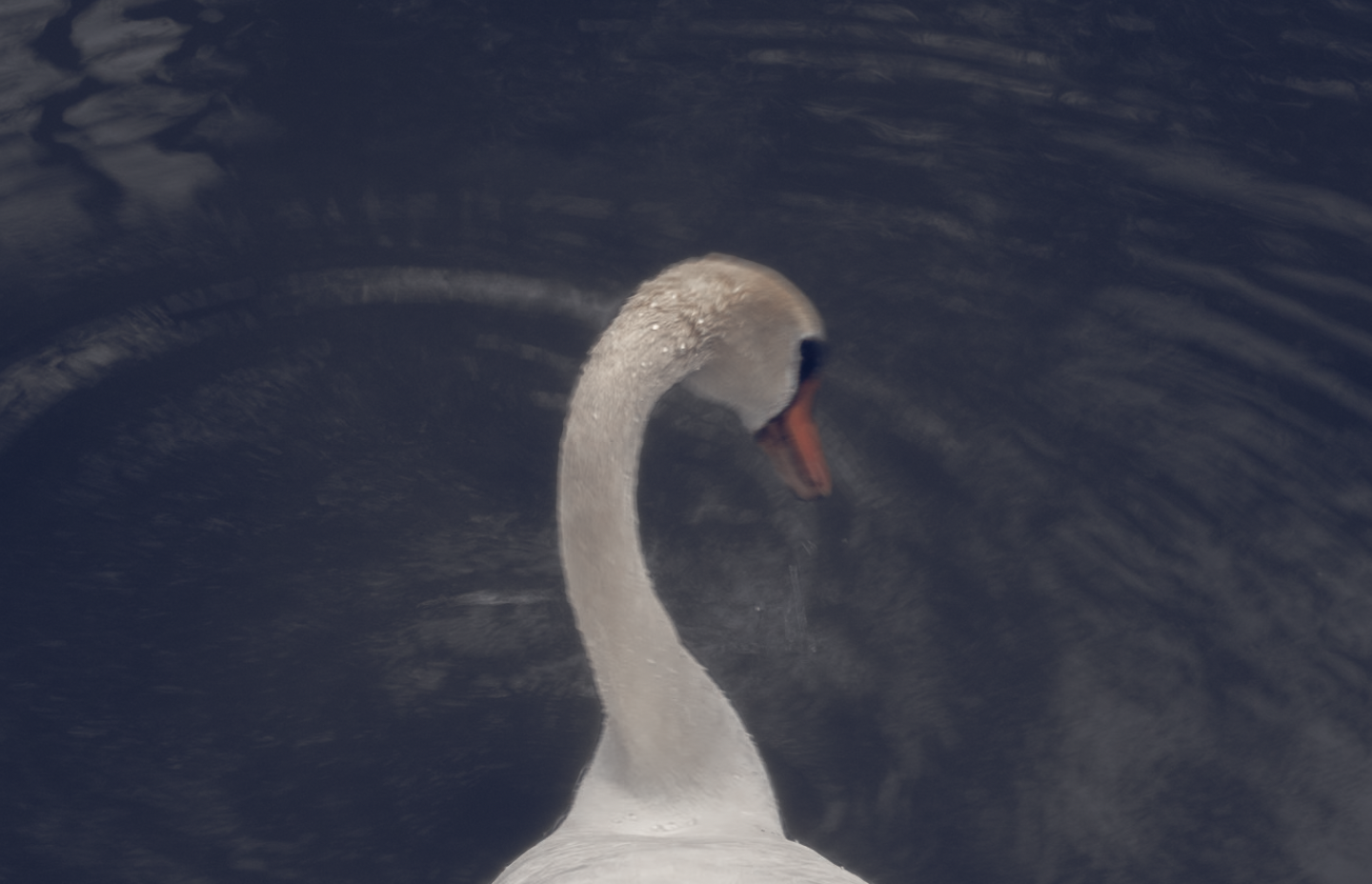
Birds are said to be carriers of messages between worlds. In Celtic mythology, white swans are psychopomps - associated with transformation, rebirth and transitioning to the darkness of the underworld.
In the ballet Swan Lake, the princess Odette is cursed to live as a swan by day, returning to human form only at night. She is trapped in a body not entirely her own and bound by forces beyond her control. Her only hope for liberation lies in true love - a promise that is broken when the prince is seduced by her double, Odile, the Black Swan.
Here, we see a split: purity versus seduction, victim versus temptress, white versus black. The woman becomes two. The swan’s body becomes symbol and cage.
The play Swan Lake originated in Russia and was based on a mix of Russian and German folklore, specifically the swan maiden lore. In Joseph Cambell’s Way of the Seeded Earth, there are countless different examples of the same “swan maiden” myth repeated throughout cultures across the world. It usually goes something like this:
A man—often a hunter or a prince—wanders into the forest or along a remote lake. He comes upon a group of swans gliding across the water. As he watches, the swans fly to shore and remove their feathered cloaks, revealing themselves to be beautiful women. They bathe, laugh, move freely. They are unknowable. They belong to another world.
But the man hides. He steals one of their cloaks—just one. And when the time comes for the women to return to the sky, all of them transform back into birds and fly away… except the one whose cloak is missing. She is stranded. Grounded.
Without her feathers, she cannot return home.
The man emerges. He offers comfort. Maybe even love. She becomes his wife, lives in his house, bears his children. But she is never fully present. Something aches in her—an unspoken homesickness.
Eventually, she finds where he has hidden her cloak.
And the moment she touches it, she remembers who she is.
She wraps the feathers around her body, returns to the sky or the lake or the stars—depending on the version—and leaves him behind. Sometimes she says goodbye. Sometimes she doesn’t. But she always goes.
The Swan Maiden escapes - not all stories offer her that freedom.
In Greek mythology, the swan reappears in a darker form. In the story of Leda and the Swan, Zeus disguises himself as a swan to overpower - or rape - Leda. The imagery is often ambiguous, but the implications are not: it is a myth about divine coercion, about the intrusion of power into the body. Here, the swan is no longer a symbol of grace or longing—it becomes a vehicle of violence while the woman’s body is again, symbolic of a cage.
And still, the woman transforms.
Woman’s body and the swan are significantly interlinked in this matter of symbolism. The swan and the female body both become sites of projection - of desire, fear, control, but moreover, of transformation, power within darkness, reflections and embodiment of oppositions on the quest to become whole. They are vessels of change, and that change unsettles patriarchal structures. In stories like the swan maiden myths and Leda and the Swan, transformation often comes through coercion or loss of agency. Forced shapeshifting. Sexual violence. The woman must bend or break to survive it.
The Horrors of Girlhood: Film, Flesh, and Female Psyche
“When I was very young, my mother took me for walks in Humboldt Park, along the edge of the Prairie River. I have vague memories, like impressions on glass plates, of an old boathouse, a circular band shell, and an arched stone bridge. The narrows of the river emptied into a wide lagoon and I saw upon its surface a singular miracle. A long neck rose from a dress of white plumage.
Swan, my mother said, sensing my excitement. It pattered the bright water, flapping its great wings and lifted into the sky.
The word alone hardly attested to its magnificence nor conveyed the emotion it produced. The sight of it generated an urge I had no words for. A desire to speak of the swan, to say something of its whiteness, the explosive nature of its movement, and the slow beating of its wings.
The swan became one with the sky. I struggled to find words to describe my own sense of it. Swan, I repeated, not entirely satisfied, and I felt a twinge, a curious yearning, imperceptible to passerby, my mother, the trees, or the clouds.”
Recently, swans have been appearing to me - at the park, in movies, in dreams, in music and books. I’ve been pulled toward their beauty, their grace, the sense of something poetic shimmering beneath their feathers. I’ve been photographing them, reading about their symbolism, falling deeper into the myths that surround them. But the more I uncovered, the more I began to notice a darker shadow pattern surfacing. Hidden within these stories, I began to see the horrors of girlhood - a constant theme that haunts girls, not just in horror films, but in mythology, psychology and, well society in general.
To frame the ideas I’m exploring in this paper, I want to start by looking at scenes in Darren Aronofsky’s Black Swan. I see the film as a mirror for my central idea here: that both the swan and the girl have been culturally coded as symbols of transformation through not just suffering, but stripping away of power. This pattern of descent is not merely symbolic - it reflects a broader cultural expectation placed on individuals socialized or perceived as feminine, demanding transformation through suffering. I’ve noticed how often these characters are asked to break themselves apart just to meet opposing ideals: to be pure and seductive, innocent and knowing, controlled and wild. I want to examine how this pattern plays out in Black Swan, and what it says about the way our culture mythologizes transformation - especially when it comes to femininity.
I am choosing to use movies as an entry point to this topic because horror films offer a dark and entertaining visual entrance into archetypes and psychoanalysis. And also I recently read Barbra Krueger’s The Monstrous Feminine: Film, Feminism and Psychoanalysis, which has inspired me to use film as an entry point to dissect topics that are important to me. And also because! I have found cinema can be used by a viewer to interpret symbolism in a deep and magical way. If you look closely and not only pay attention to the movie, but meditate on the play of light, the repeating visual themes, the unfolding of a message - you can find and even embody profound messages being offered. The messages can come in an infinite amount of ways, creating an individual spiritual experience where the gap is closed between the brain and movie. Suddenly, the viewer is experiencing what is on screen as if it's happening to them. But only if it's executed in such a way. Thus, Darren Aronofsky’s Black Swan becomes a powerful site for deconstructing the before mentioned tensions.
““If we are alert and open, film has the capacity to engage us with wonder, to touch the divine. When cinema is true, it lets us feel the world without barrier.””
While using Aronofsky’s film to deconstruct different themes within the movie, I will simultaneously use this writing as a way to explore and define my own fine art photography. Linking together, film, photography, feminism, a little bit of psychology and a lot of symbolism and magic. Not only to dissect the horrors of girlhood, but as well as an act of reclamation and reconnection to power from within.
Darren Aronofsky’s Black Swan lays the groundwork for examining how the swan - and, by extension, the girl - is represented through themes of transformation, control, and psychological rupture. In the case of Nina Sayers (Natalie Portman), the film explores several recurring motifs tied to the horrors of girlhood: the pressure to surrender one’s will to external forces, the looming influence of a devouring maternal presence, and the internal fracturing that occurs under the weight of impossible expectations.
But first, let me define what I am referring to when I say “horrors of girlhood” because this is not a known phrase, though maybe you can have already put it together at this point. In current culture, there is a glorification of “girlhood” in pretty pink with stuffed bunnies and blue skies and crushing on boys in the hallways, wishing to the stars you might be hot enough for him to like you back. I often come across ideas of girlhood that are nostalgic and reminiscent of the times when we were innocent - a summer day running around in the backyard naked with popsicle juice dripping from our chins. Times when mom could tell us, “it’s going to be ok,” and we could believe her. I think these times are great, a shared experience not only amongst girls, but all children. Being a child, its lovely and sweet and sometimes we long to go back.
Don’t get me wrong, I love my bunny and a warm summer day, but something missing from the shared experiences of girlhood is the darkness. A split from the pink reality. Probably, these moments are not always shared because we were scared, sad or disturbed. I remember moments as a little girl, seeing images of women in magazines and on billboards with huge boobs and shiny skin - then looking at my small child-hands and realizing that my little body could never look like that. I remember moments of looking at my tear stained face in the mirror, examining myself from all angles to check if I was skinny enough yet. Moments of shaving my calves, thighs, armpits, vagina and putting on makeup and smelling sweet and praying I was doing the things to be perfect like in the pictures. Moments of touching myself and realizing that there is power in that, but then only to be taught that that power is for others pleasure, not my own.
This always happens in one way or another, that loss of innocence moment when a girl learns that a woman’s body is perceived as an object, not as an emotional being with her own set of needs and unique way of seeing the world. And that loss of innocence moment, like for so many other girls I think, was just the beginning of my descent into the hell that is perceiving my body as object for other’s pleasure. Object for looking, for touching and using and fucking. Discarding.
The horrors of girlhood refers to the psychological, physical, and symbolic terrors embedded in the transition from girl to woman within a patriarchal culture. These "horrors" encompass the repression and eruption of sexuality, the policing of the body, the fragmentation of identity, and the internalization of contradictory demands - to be pure yet desirable, obedient yet expressive, childlike yet mature. The term can capture how rites of passage like menstruation, sexual awakening, and individuation are framed as sites of fear, taboo, and transformation. The horror is not simply in what happens to the girl, but in how femininity itself is constructed as unstable, dangerous, and monstrous when it exceeds control.
Divine Coercion: The Lie of Sacred Transformation & Politics of Possession
““Untangling the lessons of girlhood from the cultural works that teach them to us is impossible; they are often our most committed teachers.””
““For the master’s tools will never dismantle the master’s house. They may allow us temporarily to beat him at his own game, but they will never enable us to bring about genuine change.””
These are the horrors of girlhood, the rites we must pass through in order to come out the other side empowered and whole - or die trying. The swan becomes powerful symbolism for this journey.
In Black Swan, we follow the ballerina Nina Sayers (Natale Portman) who is in her late twenties and dancing at a prestigious ballet company in New York. Nina greatly desires to be the lead in the upcoming high-stakes production of Swan Lake, but the role demands that she play both the white swan and black swan. Her obsession with being “perfect” makes her fit for the white swan role, but Thomas (Vincent Cassel) the director, doesn’t believe she can fully embody the black swan. Nina is coerced by Thomas into accessing a repressed, erotic femininity in the name of artistic transcendence. As pressures from performance, her overbearing mother, and purity converge, Nina becomes ensnared in a relentless dialect of mirrors that reflect the fracturing of her identity.
Divine coercion is the concept that God or a deity forces individuals to act in a way they would not choose, a violation of free-will. In the context of my argument, divine coercion is the dynamic in which a figure of authority - often male, paternal or institutional - demands a woman or girl transcend her current self in the name of something “higher”: art, beauty, purity, spiritual fulfillment or transformation. This coercion is “divine” not because it is holy, but because it cloaks itself in the language of destiny, genius, or necessity - thus naturalizing violence as transformation.
We witness this scene in Black Swan in the relationship between Nina and Thomas - the dance director. In the first scene this happens, Nina goes into Thomas’s office to ask for the role of the Swan Queen. Thomas, sensing her desperation, challenges her emotional restraint and chastises her inability to access the sensuality required of the black swan role. In a power-move, he kisses her without consent, framing it as provocation meant to awaken her sensual desires. Initially Nina freezes, but then bites his lip, hard, and he abruptly pulls away drawing blood.
This moment becomes a turning point. A confrontation with her own repressed aggression and a glimpse of the darker, more instinctual self that Thomas aims to unleash. Framed as a twisted lesson, the encounter reveals the manipulative dynamics of divine coercion, where abuse is masked as artistic mentorship. It’s also a site where Nina momentarily pushes back, asserting a flicker of agency through violence - a prelude to her eventual psychological rupture.
This coercion is usually framed as necessary or sacred - like in Leda and the Swan - but it involves psychological manipulation, bodily control, and often sexualized pressure. The term captures how patriarchal systems mask exploitation as enlightenment. It upholds male power by insisting that women must be broken open, re-made, or possessed to access their “true” potential, a potential defined by the system itself.
“The feminine is not simply an object of desire or representation; it is a disruptive force that unsettles the symbolic order. It must be tamed, controlled, or incorporated into the law of the father, often through violent and symbolic means that masquerade as initiation or transformation.”
This narrative in Black Swan runs parallel with the Greek myth I mentioned earlier, Leda and the Swan. In the myth, Zeus disguises himself as a swan to rape Leda. Leda’s rape leads directly to the birth of Helen and eventually the Torjan war. This reinforces the recurring theme where a woman’s suffering or violation serves a larger narrative purpose, often to the benefit of men and gods.
This myth is frequently eroticized in Western art and literature. The retellings often center the spectacle of Leda’s body and the swan, reinforcing how female trauma is transformed into visual or poetic beauty, echoing how Black Swan portrays suffering as sublime when filtered through art and the horror film.
“The archaic mother is present in all horror films as the blackness of extinction - death. The desire and fears invoked by the image of the archaic mother, as a force that threatens to reincorporate what it once gave birth to, are always there in the horror text - all pervasive, all encompassing - because of the constant presence of death. The desire to return to the original oneness of things, to return to the mother/womb, is primarily a desire for non-differentiation. If, as Geroge Bataille argues in Death and Sensuality, life signifies discontinuity and separateness, and death signifies continuity and non-differentiation, then the desire for and attraction of death suggests also a desire to return to the state of original oneness with the mother. As this desire to merge occurs after differentiation, that is after the subject has developed a separate, autonomous self, it is experienced as a form of psychic death. In this sense, the confrontation with death as represented in the horror films gives rise to the terror of self-disintegration, of losing one’s sense of self or ego - often represented cinematically by a screen which becomes black, signifying the obliteration of self, the self of the protagonist in the film, and the spectator in the cinema.”
The archaic mother. It is clear by the end of the film that Nina’s mother is suffocating and preventing Nina from embodying her fully realized womanhood - trapping her in an infantilized state. In the framework of my argument, I would like to zoom out on this point and while I realize this is a major plotline in the film confining Nina and leading to her demise, there is a broader point I want to touch on regarding an older woman’s purpose in patriarchal society as being defined solely as caretaker - at the risk of losing her sense of identity. At the risk of becoming disposable.
Erica Sayers, (Barbara Hershey) is Nina’s mother and a failed ballet dancer, whose career fell short because she became pregnant with Nina. Erica is an embodied example of the cost a woman pays for becoming sexually awakened, tainted. Nina lives her life pure and perfect maybe as an attempt to avoid becoming like her mother. In fact there is a scene when Nina and her mother are talking, Erica asks if she is being taken advantage of by Thomas and Nina says no, to which Erica replies, “Good, I just don’t want you to make the same mistake I did,” meaning that after she had sex, Erica became pregnant and her career and autonomy were sacrificed in the process of Nina’s birth. Now, Erica possesses Nina as an attempt to preserve her virgin angel, to keep her good forever and never let her be exposed to the defiled realities that she witnessed as a girl.
By trapping women in the belief that motherhood is their sole identity, patriarchy exerts a powerful form of control. This dynamic can lead mothers to project that same control onto their children, clinging to them as extensions of themselves rather than as independent beings. While parental guidance and nurturing are, of course, essential, the boundary between healthy care and overbearing possession is perilously thin. When crossed - often unknowingly - it can result in the mother projecting her own unresolved experiences and repressed traumas of girlhood onto her child, perpetuating the very horrors she once endured. In this way, Erica is yet another reflection of Nina’s psyche.
Throughout Black Swan, we always see Erica dressed in black. I read this as a symbolic representation of death and the archaic mother - a figure tied to decay, control, and the fear of regression. Erica isn’t just a strict parent; she’s a haunting presence, pulling Nina back toward a state of dependency, threatening a return to the womb. As women, our bodies are linked to nature, to cycles of birth, death, and transformation - and that connection can be both powerful and terrifying. This adds to the push and pull, black and white dichotomy of the movie because the more Erica tries to keep Nina close, the further away Nina descends. And the more Nina descends, the closer she gets to the archaic mother - death.
There’s something deeply unsettling about this transformation, not just because of what Nina is becoming, but because it exposes how little control either of them has ever had over their own bodies. Erica’s body was the vessel; Nina’s is now the battleground. Neither mother nor daughter is granted true bodily autonomy - both are shaped, possessed, and controlled by outside forces: the ballet institution, the male gaze, cultural expectations, patriarchy.
Nina’s evolution - her sexual awakening, her creative chaos, her descent into multiplicity - is not seen as growth, but as a threat. A threat to her mother, to the other girls in the company, to the pristine image she’s expected to uphold. This is the horror: that a girl’s transformation, her becoming, her stepping into power, is framed not as a rite of passage but as a crisis. Her body reacts accordingly - splitting, bleeding, blooming in painful and uncontrollable ways. In Black Swan, we watch the monstrous feminine emerge not because Nina is evil, but because her very act of becoming is feared.
That’s important. It tells us that the divide between purity and corruption doesn’t just exist outside of us - it lives within us, passed down, embedded deep in the female psyche. And so the system succeeds again.
“Fear of the archaic mother turns out to be essentially fear of her generative power. It is this power, a dreaded one, that patrilineal filiation has the burden of subduing.”

Maiden, Mother, Crone: Archetypes of Becoming and Fragmentation
When I think more deeply about the fractured female psyche, I’m drawn to the Maiden, Mother, and Crone archetypes - archetypes rooted in ancient pagan traditions and often associated with the cycles of the moon. These aren’t meant to box us in, but to give language to the full range of the feminine experience. The Maiden speaks to youth, curiosity, and the thrill of becoming. The Mother embodies creation, sensuality, and fierce protection. And the Crone holds space for wisdom, endings, and transformation. We are at our most powerful when we’re able to hold all three within us - fluidly moving between them as life calls us to, not confined, but integrated and self-defined.
However, we live in a world that feels like it doesn’t want us whole. Patriarchy, capitalism and the general political environment splits these archetypes apart, flattens them, and tells us we can only be one - if we even get to choose at all. It makes the sacred into something shameful. The Maiden must stay innocent. The Mother must give endlessly. The Crone must vanish. This kind of fragmentation isn’t just psychological - it’s spiritual violence. It keeps us from ourselves.
In Black Swan, we see this split playing out vividly in Nina and the women around her. Nina is the Maiden, trapped in perfectionism, innocence, and fear of change. Lily, with her chaos, freedom, and sexuality, becomes a kind of Mother - not in a maternal sense, but in the way she embodies raw generative power. Erica, Nina’s actual mother, clings desperately to the Mother role - terrified that her daughter’s becoming will erase her own identity. But she also carries the Crone’s wound: like Beth, she’s been discarded by the ballet world, pushed to the margins. Beth herself is the Crone personified - exiled, feared, and punished for aging. Her act of stabbing herself in the face is horrifying and deeply symbolic: it’s the rage and grief of a woman watching herself be erased because her body has begun to age.
These women aren’t just characters - they’re mirrors. They reflect the pieces of Nina’s fractured psyche, the parts she’s been taught to keep separate. Better yet, they reflect us - our struggles to hold complexity, to grow, to be more than just one thing. Black Swan doesn’t just show one girl’s descent - it shows what happens to all of us when we’re kept from becoming whole.
This film is a mirror.
Because what about us - the viewer? We watch Nina spiral. We are drawn to her fragility, her beauty, her descent. But, what role do we play in her destruction? The camera lingers on her body, her pain, her unraveling - and we follow willingly. Black Swan implicates us in the spectacle. Just as Thomas manipulates Nina under the guise of art, the film asks how often we, too, consume women’s suffering as entertainment, aesthetic, catharsis.
The gaze - our gaze - is not passive. It shapes what is allowed to be seen. It rewards women who are palatable, controlled. Are we watching a woman lose her mind, or are we watching a system succeed in breaking her?
Black Swan offers viewers, especially women,a mythic language for transformation. By engaging with the archetypes, by sitting with the discomfort, by witnessing the horrors of girlhood and woman’s fragmented psyche, we are invited to see ourselves more clearly.
“Only gradually did I discover what the mandala really is: ‘Formation, Transformation, Eternal Mind’s eternal recreation.’ And that is the Self, the wholeness of the personality, which if all goes well is harmonious, but which cannot tolerate self‑deceptions.”
What parts of you have been exiled - your sensuality, your rage, your intuition? Where do you feel forced to choose between being loved and being whole?
Nina's story can be a lesson: not in how to die for perfection, but in how to reclaim your own shapeshifting identity - on your terms. To step into the Maiden’s wonder without naivety, the Mother’s power without self-erasure, the Crone’s wisdom without shame. Jung wrote of the importance of individuation, of integrating the shadow. Black Swan offers a visceral, visual myth for this process - a dark fairy tale that asks us to face the mirror and stay. And let the horror become holy.
““Although the subject must exclude the abject, the abject must, nevertheless, be tolerated for that which threatens to destroy life also helps to define life.”
The End.